Every quote starts with a quick conversation. Share a few details here and we will price out Chimney Repair Tsawwassen
Think of this page as a reference you can come back to. It collects common questions about chimney and masonry repair from homeowners around Tsawwassen and answers each one directly, with the reasoning behind it. Whether you landed here after typing “chimney repair” or someone who recently had their chimney fixed sent you the link, you should leave with a clearer idea of what needs doing, what can wait and what to ask before any work begins.
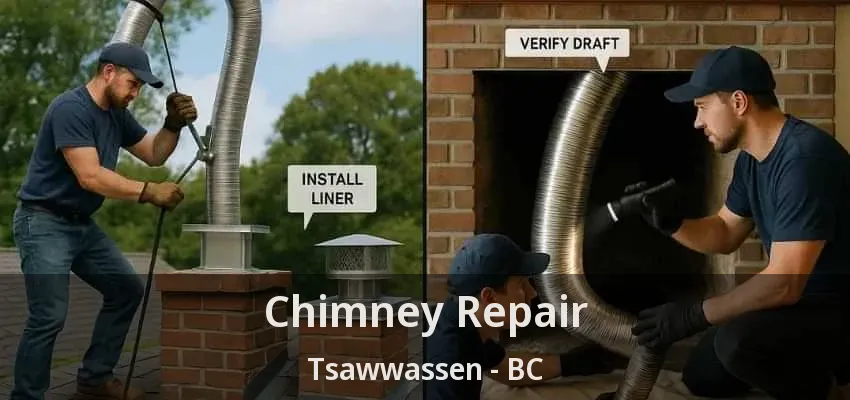
Repairs matter because chimneys tend to fail slowly at first and then expensively. We regularly open up a chimney where a minor issue, such as a missing cap or one cracked mortar joint, was left alone for a few seasons. By then, water has soaked the bricks, rusted the damper or softened the wood framing beside the stack. Work at that stage takes longer and uses far more material. Catching the same fault early usually means a short visit and a modest bill. There is a safety side too, because a damaged flue or liner can let heat and smoke escape where nobody expects them.
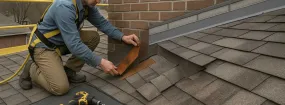
Most repairs fall into a handful of categories. Water-related jobs top the list: crown sealing or rebuilding, flashing repair, cap replacement and repointing worn mortar joints. Next come brick replacement where faces have spalled and repairs to the parts inside, such as a rusted damper, cracked flue tiles or a damaged firebox. Factory-built chimneys more often need chase cover replacement or fixes to framing and siding. Whatever the starting point, anyone researching “chimney repair” should expect the technician to look for the cause behind the symptom, since one missing cap can explain a rusty damper, a stained ceiling and spalled bricks all at once.
A masonry chimney has more parts than most people realize, and each one can need repair on its own. From the top down, you will usually find:
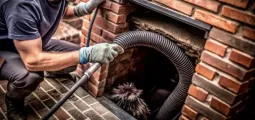
Inside the house sit the damper, the smoke chamber, the firebox and sometimes an ash dump. Factory-built chimneys swap the brick for a metal flue inside a framed chase with a metal cover on top.
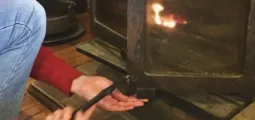
It depends on the damage, so the safe default is to hold off until someone has looked at it. Cosmetic problems on the outside, such as a stained brick face, rarely affect how a fireplace works. Damage inside the flue, a cracked liner, a damper stuck shut or a blocked vent is different, because smoke and hot gases may not leave the house the way they should. If you notice smoke spilling into the room, a strong smell or soot where there was none before, stop using the fireplace. Keep working carbon monoxide alarms on every level of the home either way.
Your chimney is most likely leaking at the crown, the flashing, the cap or through porous brick, though the stain rarely appears where the water gets in. Rain that slips past a cracked crown may travel down inside the masonry and show up at the firebox. Flashing leaks tend to stain the ceiling or the attic framing next to the chimney. An uncapped flue lets rain fall straight onto the damper, where it causes rust and a damp smell. Porous brick can wick moisture through the whole stack during long storms. We often test one area at a time with a hose, starting low and working up, so the repair targets the real entry point rather than a guess.
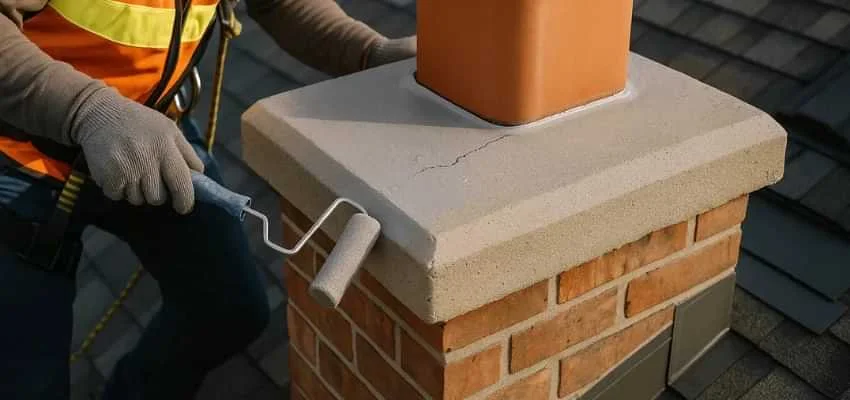
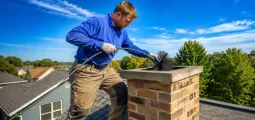
Not every repair needs the roof, and when one does, we plan safe access before we arrive. Work at the top of the stack means ladders, roof brackets or harnesses tied to a secure anchor, plus soft-soled footwear and pads to protect shingles. Steep or high roofs may call for extra equipment or a second technician. Wet, icy or very windy weather puts roof work on hold, because no repair is worth a fall. Jobs at the bottom of the chimney, such as an ash dump, a throat damper or a stove connection, keep us indoors, where the main concern is protecting floors and furniture from soot and dust.
It depends on the problems, your budget and the season. Anything letting water in or affecting safety, such as a missing cap, a cracked crown, bad flashing or a damaged liner, should come first, because those problems make everything else worse. Cosmetic work, like improving the look of weathered brick, can usually wait. Grouping roof-level jobs into one visit often saves on setup and access, so if several items are due soon, doing them together may make sense. Ask anyone quoting “chimney repair” work to rank each item by urgency so you can plan with confidence.
Labor, access and materials drive the price, roughly in that order. Labor depends on the size of the repair and whether it can be finished in one visit or needs curing time between stages. Access covers roof height, pitch and anything that makes ladder setup awkward, such as a deck or steep slope below the chimney. Materials range from a tube of sealant to a custom stainless chase cover or a full liner kit. We also leave room in the conversation for surprises, because opening a chimney sometimes reveals more. Our quotes list each part of the work separately, so you can see where the money goes.
When booking chimney repair, describe what you have noticed and where, because those details shape the visit. Mention whether the chimney is brick, stone or a factory-built system in a framed chase, what it serves, such as a wood fireplace, gas fireplace, stove or furnace, and roughly how tall the house is. Say when the problem started, whether it gets worse with rain or wind and whether anything has been repaired before. Pictures of the chimney from the ground and of any stains or damage inside help the company bring the right parts and give a realistic time estimate.
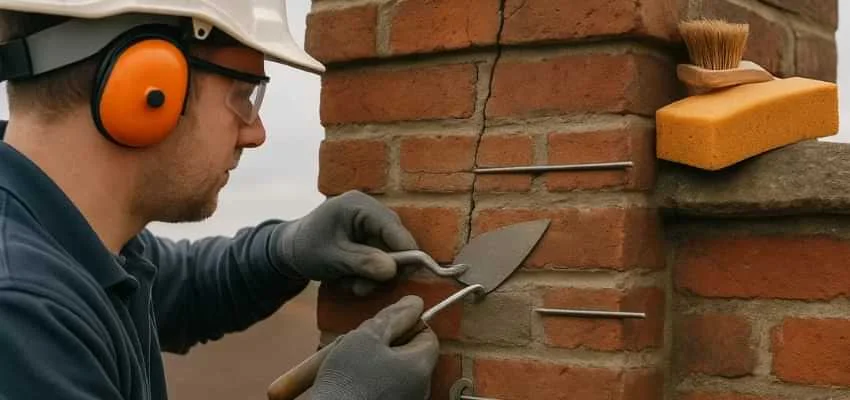
Use the short form to tell us what you need and when you are available. We confirm the details with you before anything is scheduled. Open the quote form and Chimney Sweep Tsawwassen will be in touch about chimney and masonry repair for your home.
A swept flue and plain answers: Chimney Cleaning in Tsawwassen
Careful Chimney Sweep for wood fireplaces and stoves in Tsawwassen
From roof cap to firebox, Chimney Sweep Services in Tsawwassen
Before relighting in Tsawwassen, a visit from Fireplace Experts
Fireplace smell at startup? Gas Fireplace Cleaning in Tsawwassen
A record of every Gas Fireplace Maintenance visit